

Strengthen capacity in training and research to stimulate investment in Kenya’s bioeconomy sectors.
National Bioeconomy Educational and Policy Framework in Kenya (Bio-KE)
The National Bioeconomy Educational and Policy Framework in Kenya (Bio-KE) project seeks to strengthen capacity in training and research to stimulate investment in Kenya’s bioeconomy sectors.
Kenya’s bioeconomy sector remains underdeveloped due to critical gaps in education, policy, and investment. Specifically, universities have limited capacity to offer bioeconomy programmes owing to weak research and innovation systems, underdeveloped policy frameworks, and limited dedicated programmes tailored to advancing the bioeconomy. Government agencies also have sustainability strategies but lack compelling value propositions to attract and support bioeconomy investment.
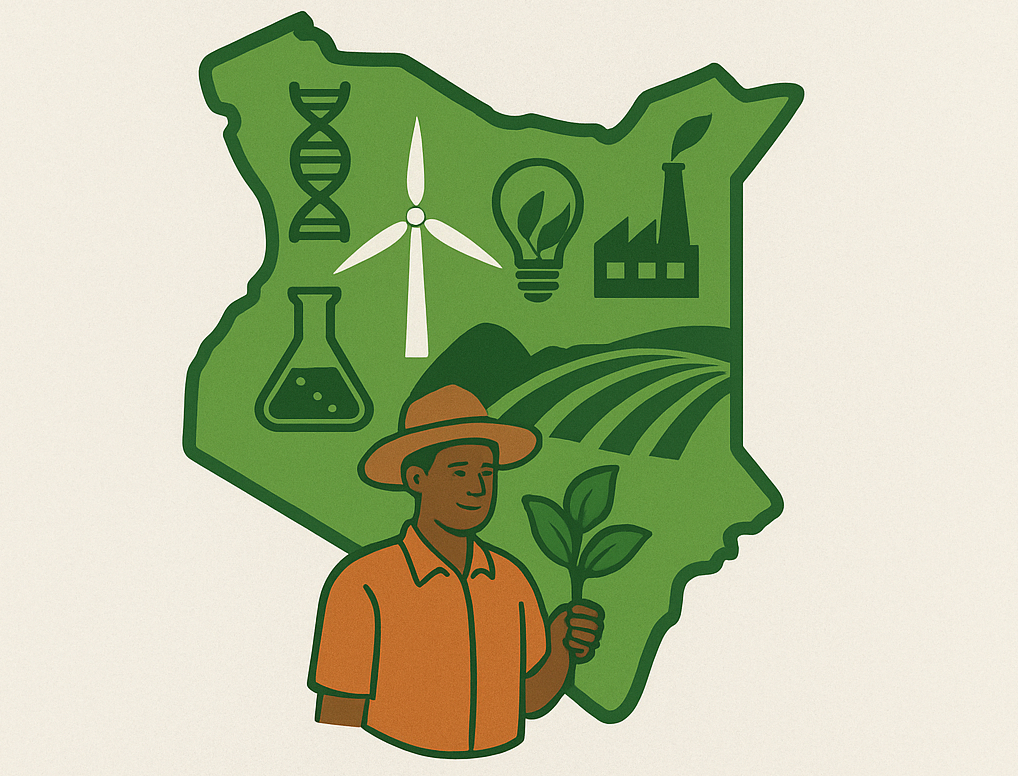

The National Bioeconomy Educational and Policy Framework in Kenya (Bio-KE) project seeks to strengthen capacity in training and research to stimulate investment in Kenya’s bioeconomy sectors. Anchored in Kenya’s Vision 2030 and the East African Regional Bioeconomy Strategy, the initiative is guided by four specific objectives:
- Enhance the institutional capacity of educational government agencies to develop a National Bioeconomy Education Framework in Kenya.
- Strengthen the capacity of higher education institutions (HEIs) to design and implement competency-based bioeconomy curricula for training youth in employable green skills.
- Accelerate collaboration between HEIs and bio-entrepreneurs to improve bioeconomy education and business development, leveraging EU partner experiences.
- Establish bioeconomy community living labs to foster continuous multi-stakeholder engagement and create a publicly accessible bioeconomy information centre.
Partners
Government: Commission for University Education, National Commission for Science Technology and Innovation (NACOSTI); HEIs: Egerton University, Chuka University. Industry: Africa Bioenergy Programmes Limited, the University of Hohenheim, and the Technical University of Denmark; Associated Partners: the Ministry of Agriculture and Livestock Development, the International Science Council, the National Research Fund, KUCCPS, the Bioeconomy Coalition of Africa, AGriKilimo, and the International Development Institute.
The call for this proposal is funded under the European Union’s Erasmus+ programme — specifically within the Capacity Building in Higher Education (CBHE) framework.